The evidence we built on
Question lists, teach-back, shared decision-making and the missing family layer: the research behind Seenly's design.
Anyone can build a health app around what sounds helpful. We tried to build one around findings that already existed, which is a narrower and more irritating constraint, because the literature is silent on most of what a product actually has to decide. Here is the part it isn’t silent on.
Preparation changes what happens in the room
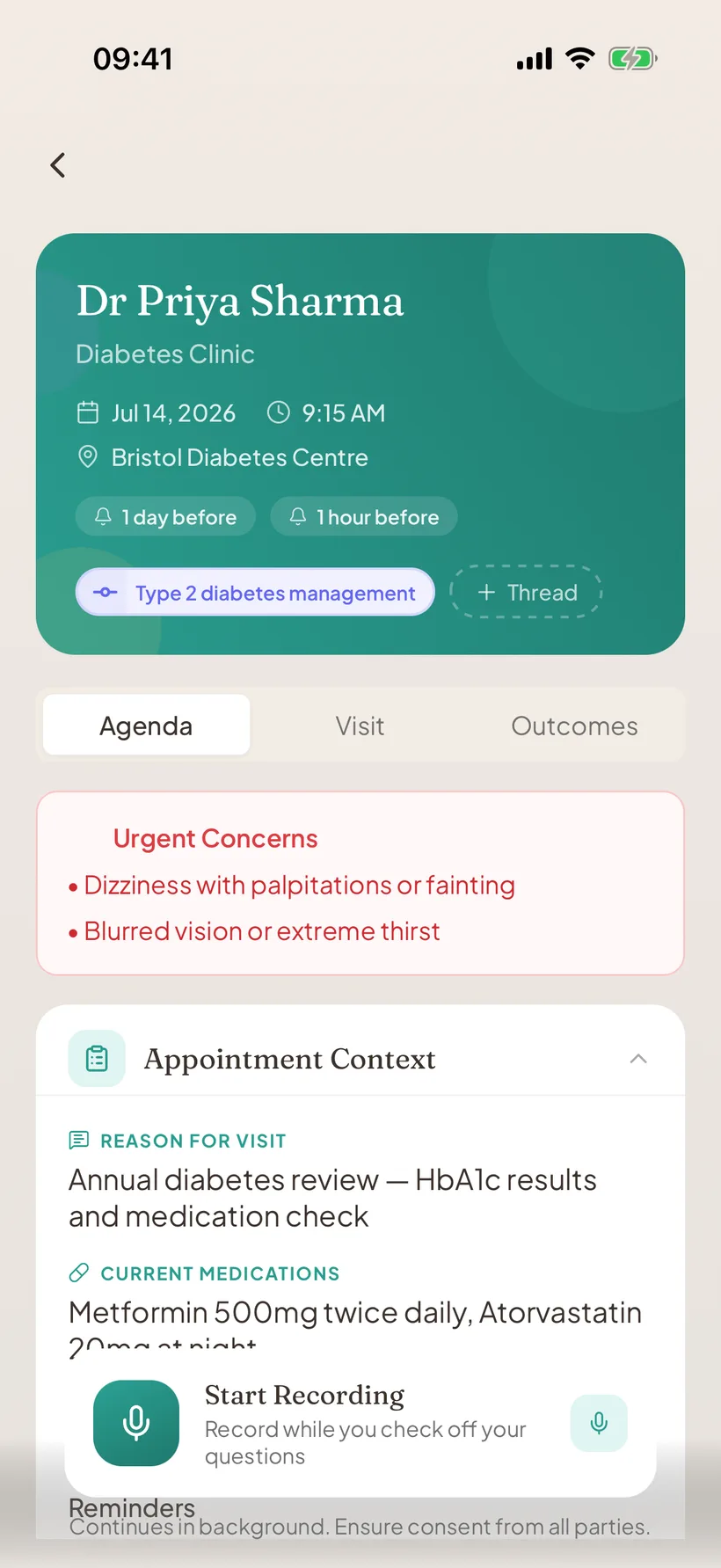
The US Agency for Healthcare Research and Quality tells patients to set their own agenda and bring a written list of questions. Its review of the evidence finds that decision aids and preparation strategies increase patients’ knowledge and their involvement in decisions, and can reduce anxiety and make people more likely to stick to a treatment plan.1
So Seenly’s work begins before the appointment rather than at the record button: a symptom timeline, a medication list you’ve actually looked at, and suggested questions for that type of visit.
Understanding doesn’t happen just by being told
Two findings sit next to each other here. Teach-back, where you say the information back in your own words so it can be checked, has repeated evidence behind it as a way to improve comprehension and retention.2 Alongside it, a 2025 review in the Journal of Medical Internet Research found that tools which walk a patient and clinician through a choice together, built into the patient’s medical record, improved clinical outcomes and left people less torn about the decision.3
Both point the same way. Comprehension has to be actively supported by someone or something, or it doesn’t reliably occur. Seenly’s version of that support is handing the conversation back in plain language alongside the clinical terms, so you can hold what you took away against what was said.
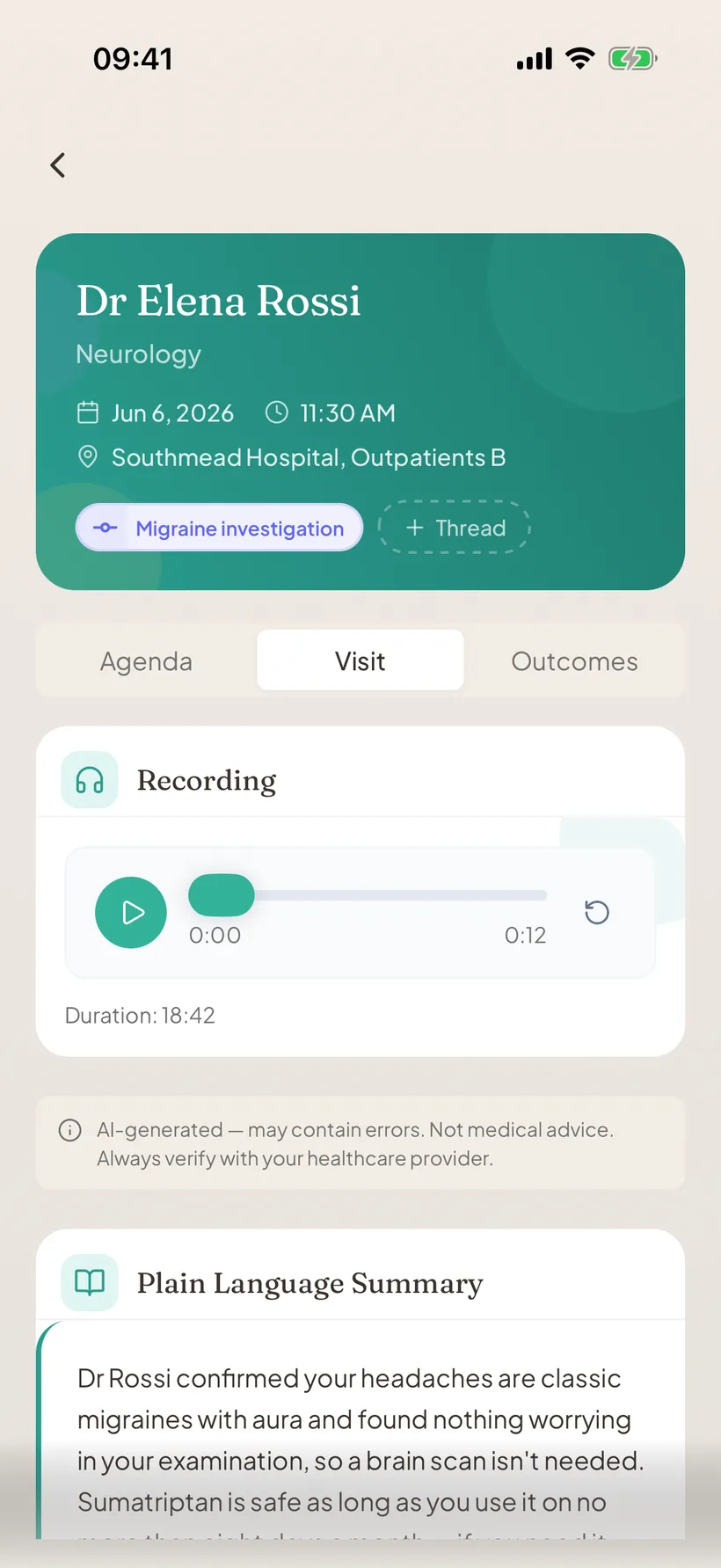
Structure of that kind is also what seems to separate the apps that move outcomes from the ones that don’t. Scepticism about health apps is warranted and we share it, but a 2024 randomised controlled trial of adults with long-term conditions and poor access to healthcare found that app users took their medicines as prescribed more reliably, and felt more able to manage their own care, than the people who didn’t use it.4 A modest claim, honestly earned, and the mechanism was reminders and feedback rather than good intentions. Appointment outcomes become tracked tasks in Seenly for the same reason.
The gap nobody has filled
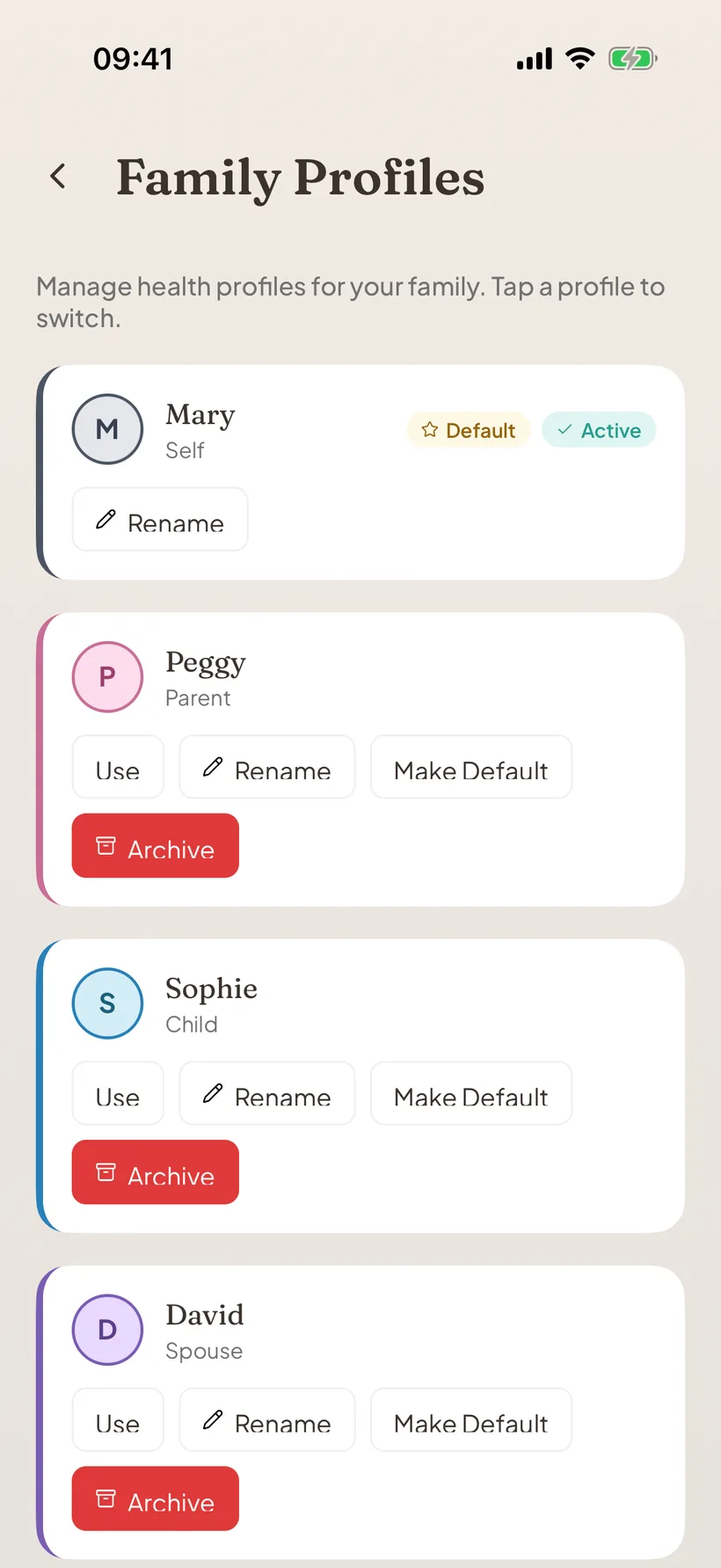
A 2024 review of caregiver apps concluded that no existing app adequately supports someone coordinating care for several family members across several providers.5 Policy points at the same hole from the other side: RAND’s framework for integrating family caregivers into the care team recommends building caregiver-facing technology for information-sharing and care integration.6
Seenly’s family profiles sit in that gap: one account, one record per person you look after.
Where this leaves you
You don’t need to read the studies to benefit from them. In short, prepared patients get more from their appointments, supported patients understand more of what was said, and families coordinating care have had nothing up to the job, until now. The research found what helps, but we’ve turned it into something you can hold.
Sources
- AHRQ, Strategy 6I: Shared Decision-Making.
- Empowering Patients Through Effective Communication: The Teach-Back Method, PMC (2024).
- Shared Decision-Making Tools Implemented in the Electronic Health Record: Scoping Review, Journal of Medical Internet Research (2025).
- Effects of a Medication Adherence App Among Medically Underserved Adults with Chronic Illness, PMC (2024).
- Mobile Health Apps, Family Caregivers, and Care Planning: Scoping Review, Journal of Medical Internet Research (2024).
- RAND Corporation, A Framework for Integrating Family Caregivers into the Health Care Team.