5.7m2
unpaid carers counted in the UK by the 2021 Census. Surveys put the real number far higher.
Decades of research point the same way. Things go unsaid in the room, and under half of what is said is recalled afterwards.
5.7m2
unpaid carers counted in the UK by the 2021 Census. Surveys put the real number far higher.
49%3
of key information from a specialist appointment is recalled unprompted.
43%4
of working-age adults in England struggle to understand everyday health information.
No app5
adequately supports families coordinating care across providers, a 2024 scoping review found.
Behind most patients there's someone keeping track: a spouse, a grown-up child. In the UK, that unpaid workforce is enormous and stretched thin.
The 2021 Census counted around 5.7 million unpaid carers across the UK2. The census question is narrow, though. Polling for Carers Week found that one in five UK adults, an estimated 10.6 million people, are supporting a relative, friend or neighbour because of illness, disability or older age6. Most of them would not use the word about themselves. Ringing the surgery again for your mother, or keeping your husband's tablets straight, is not something most people would call caring. Carers UK estimates that 12,000 people become unpaid carers every day7.
The value of that care is hard to overstate: £184.3 billion a year, nearly the entire combined NHS budget of £189 billion for the same year. Unpaid carers are, in effect, a second NHS8.
In the middle of it sits the "sandwich generation": the ONS estimates 1.4 million people aged 16–64 in the UK are raising a dependent child while also caring for a sick, disabled or elderly adult. Most are women; around half say caring limits how much they can work; and 31% show signs of depression or anxiety, against 24% of all adults9.
The pattern is global. In the United States, 63 million adults (nearly one in four) are family caregivers, up 45% since 2015; among caregivers under 50, nearly half care for a child and an adult at the same time10.
Prepare beforehand, absorb complex information under stress, remember it afterwards: the evidence says every step fails routinely.
More than 15 million general-practice appointments are missed in England every year without enough notice to offer the slot to someone else. The 7.2 million missed GP appointments alone cost over £216 million a year11. In hospital outpatient clinics, 7.6% of the 103 million appointments booked in 2021/22 ended in a "did not attend", roughly 650,000 missed slots a month12. Attending is only the first hurdle. In a BMJ study of GP consultations, only four patients in 35 raised everything they had come to say, and the items most often left unvoiced were worries about the diagnosis and side effects they were having13. A 2025 survey of 2,104 people found 32% had held something back out of embarrassment, modesty or fear of being judged14.
43% of working-age adults in England can't fully understand health information written for the public, rising to 61% when numbers are involved4. In the US, only 12% of adults are considered proficient in health literacy15. A review of 96 studies links low health literacy to more hospital admissions, more emergency care, poorer use of medicines and higher mortality among older people16. And in England's GP Patient Survey, only 56% of patients said they were definitely as involved as they wanted to be in decisions about their care17. Medical conversations are conducted in a language most of the room doesn't fully speak.
In a study of specialty-care visits, patients freely recalled just 49% of the decisions and recommendations made; even with prompting, 15% was remembered wrongly or not at all. Patients without a high-school education recalled 38%, against 65% for university graduates3. Classic research puts the loss even higher: up to 80% of medical information is forgotten immediately, and almost half of what is retained is remembered incorrectly18.
These aren't abstract inefficiencies. Communication failure is one of the best-documented sources of avoidable harm in healthcare.
80%19
of serious medical errors involve miscommunication during handovers between caregivers, according to Joint Commission analysis.
3×20
patients who face communication barriers are three times more likely to suffer a preventable adverse event in hospital.
$1.7bn21
in US malpractice costs, and 1,744 deaths over five years, in the cases CRICO Strategies examined where communication failure was a factor.
4×15
low health literacy is linked with healthcare costs up to four times higher, hospital stays around two days longer, and up to $238 billion a year in cost to the US economy.
21%22
higher healthcare costs over the following six months for the least activated patients than the most activated, across 33,163 people.
19%23
higher risk of patients not following their treatment when their doctor communicates poorly, across 106 studies.
None of this means any individual appointment is unsafe. It means the gap between what is said and what is understood has consequences you can count.
The encouraging part: the same literature points at what works. Seenly is designed around those findings, without claiming to be medicine.
In a randomised trial, patients given a 20-minute session before their appointment, going through their own records and coached to ask questions and negotiate decisions, reported fewer physical limitations six to eight weeks later24. Run again with diabetes patients, the same approach moved average HbA1c from 10.6% to 9.1%25. Both trials were small and ran in the 1980s. A later review of 33 trials covering 8,244 patients found that helping people prepare questions does increase the questions they ask26, and the AHRQ recommends setting an agenda and bringing a list27.
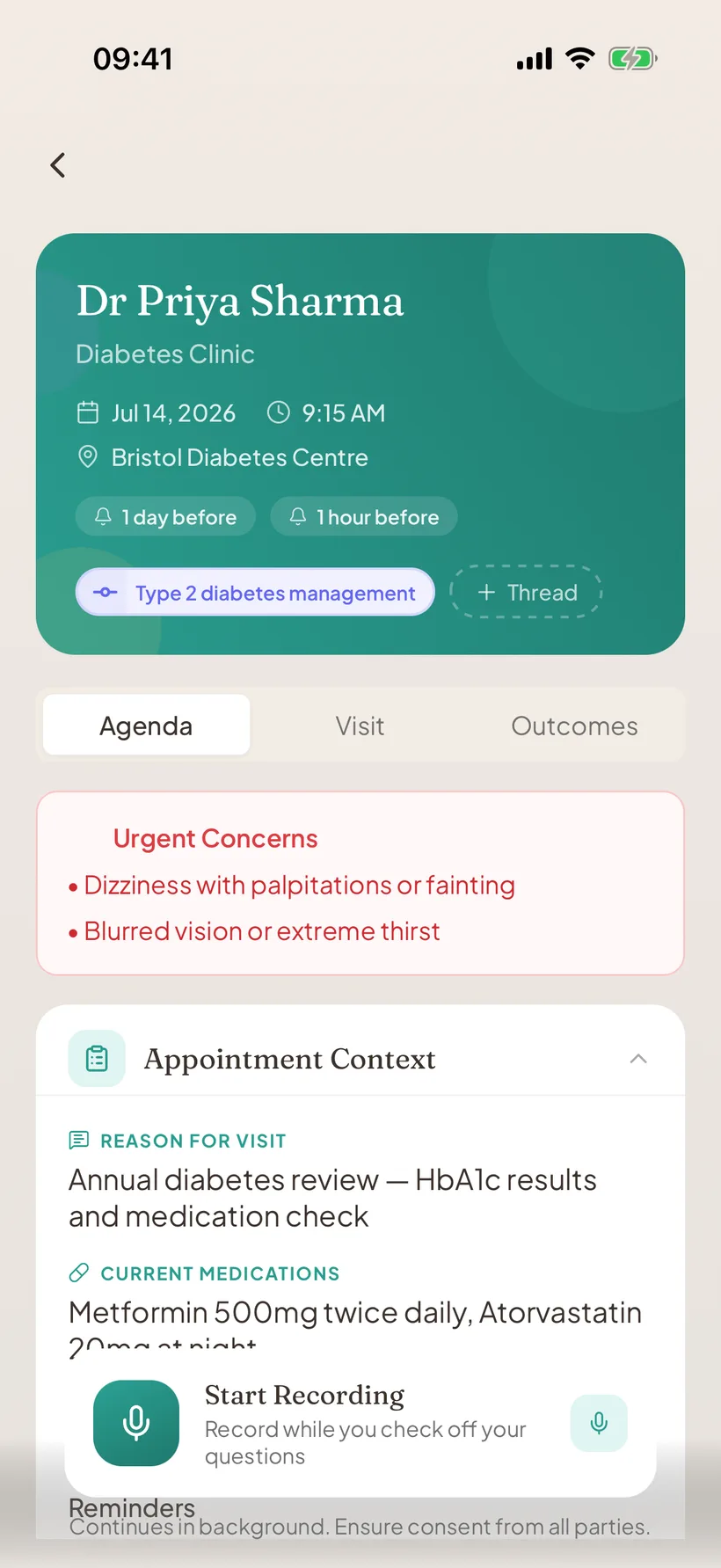
Before every visit, Seenly puts your symptom timeline, medication list and suggested questions in one place.
Techniques like teach-back (confirming understanding in plain words) measurably improve comprehension28, and shared decision-making tools integrated into care improve knowledge and reduce decisional conflict29. A review of studies giving patients a recording of their own consultation found it improved recall and understanding, and helped inform relatives who were not there30.
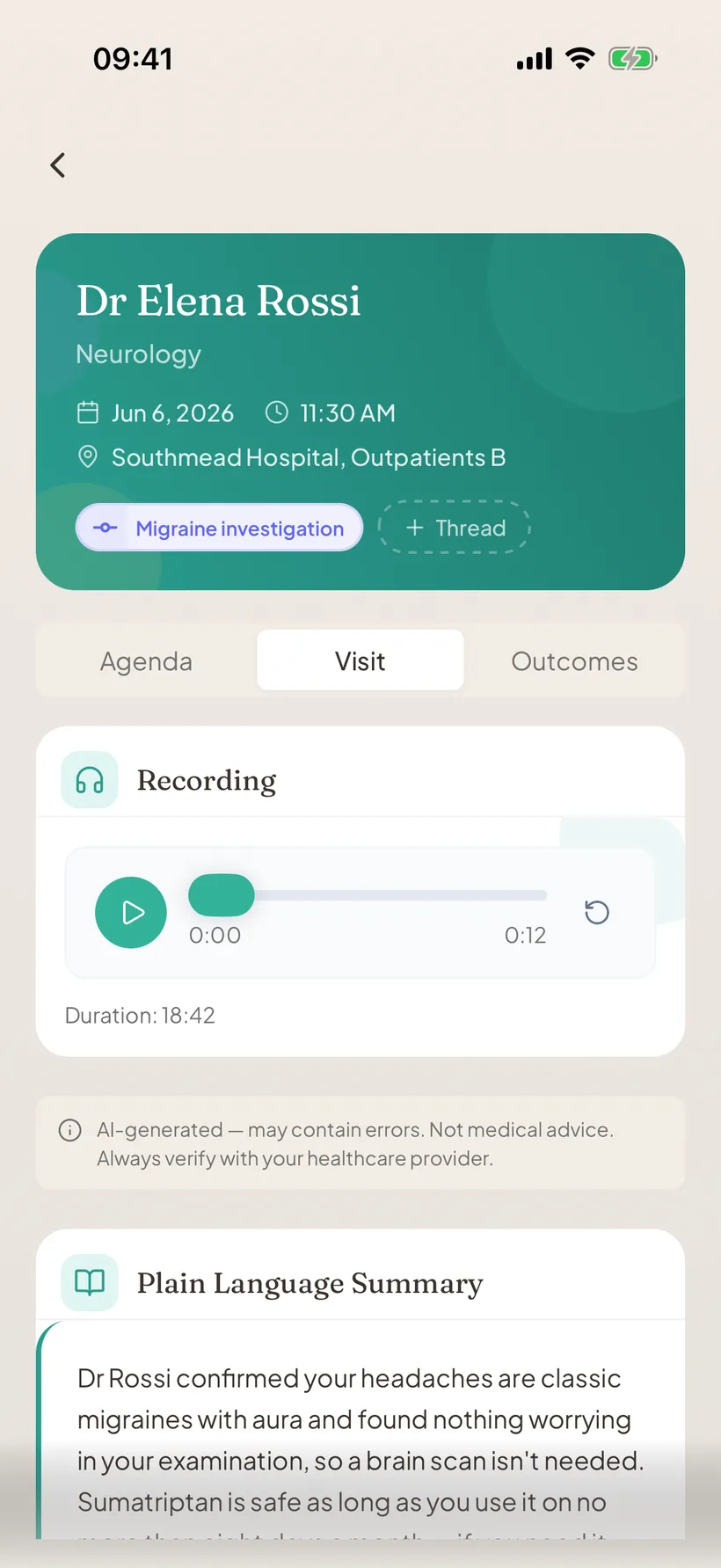
Each recorded visit becomes a plain-language summary, a medical paraphrase and a checklist of key points, so nothing rests on memory alone.
A 2024 scoping review concluded that no existing app adequately supports family caregivers coordinating care across providers5, while an RCT found a well-designed adherence app significantly improved medication adherence and self-efficacy31. RAND's policy framework calls for exactly this kind of caregiver-facing technology32.
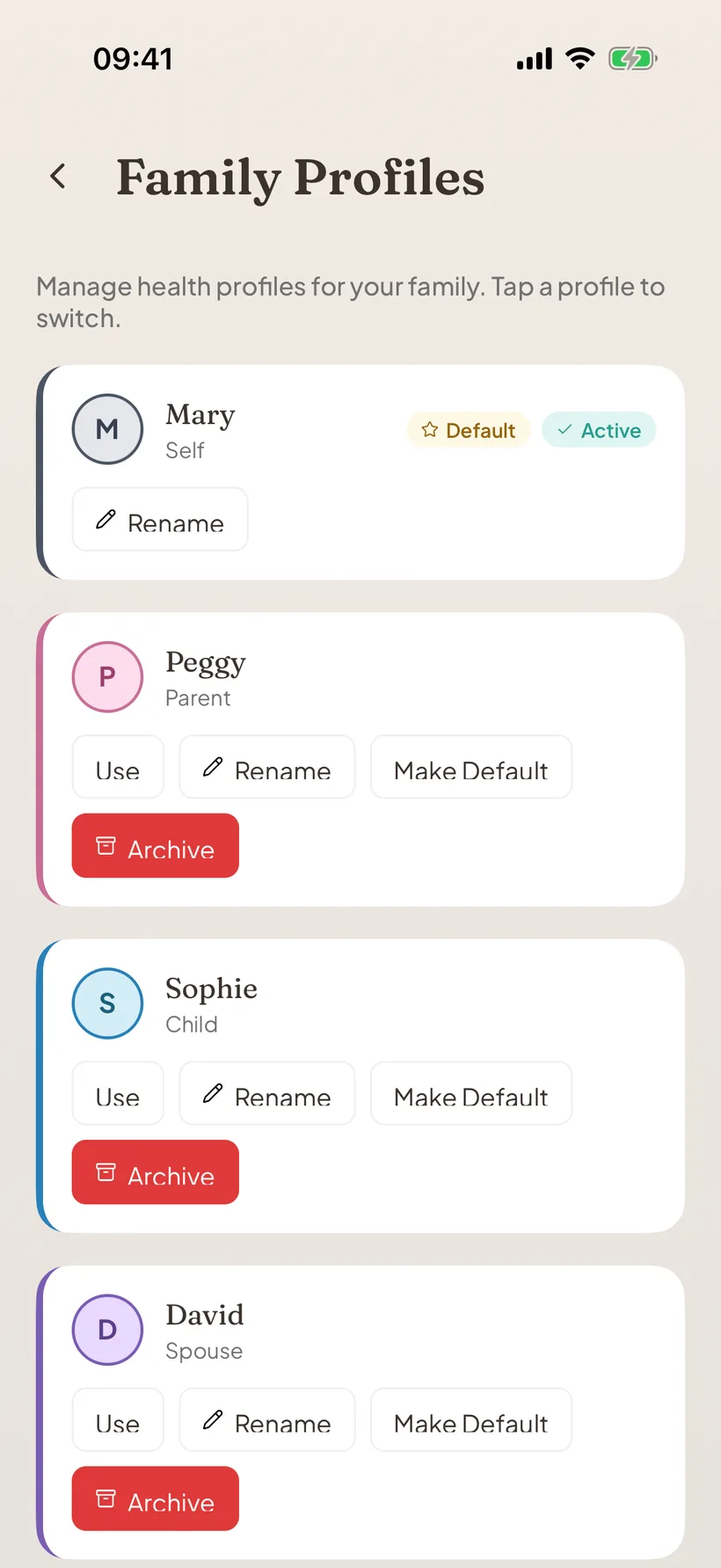
One account, a separate profile for each person you care for: built for whoever does the family's remembering.
Seenly is not medical advice and is not a substitute for a qualified healthcare professional.
Numbered in order of first appearance.
The research above shows the scale of the problem. Seenly is our solution. Early access opens before public launch, at a discounted price. Coming to iOS & Android.
You're on the list. We'll be in touch when your invite is ready.
No spam, ever. Unsubscribe any time.